look book
latest
habitat tv

Say goodbye to the morning scramble for keys, coats and sunglasses and hello to this… see this and more videos
blog

Reader roundup: Public murals and powder blues
A Morningside mural, an exterior refresh, and striped walls. Let these projects be your inspiration… more
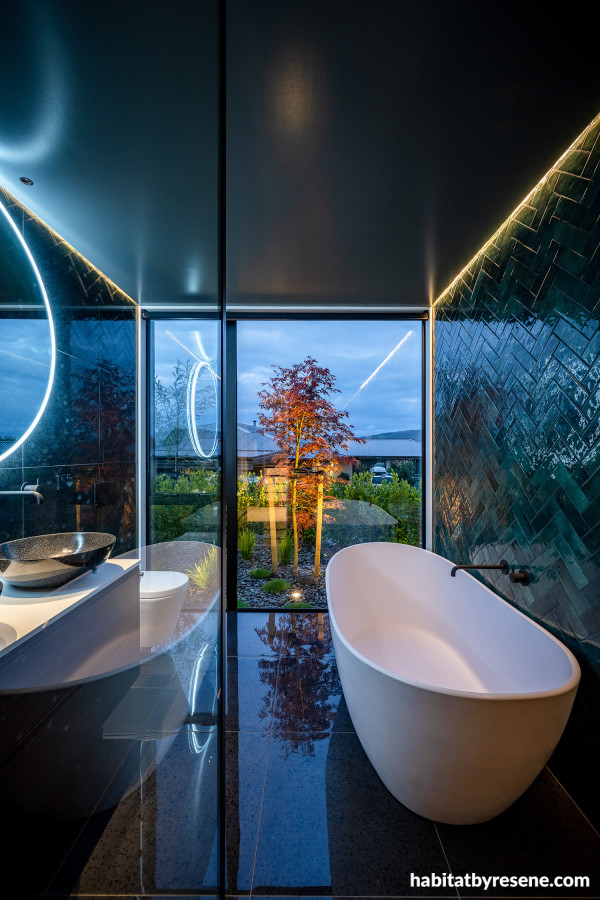
How to paint a ceiling – and get the perfect finish!
25 Feb 2026
Ceilings are often overlooked, but they can make a big difference to how a room feels. Sometimes called the ‘fifth wall’, a ceiling is a large, uninterrupted surface… we can’t put furniture on it or rarely cover it up, so it deserves just as much attention as your walls!
Most ceilings are painted in flat finishes. These help hide surface imperfections, which can become very obvious under lighting, especially if your lights cast upwards. A flatter finish keeps everything looking smooth and easy on the eye – but they are not the only option.
Choosing the right paint
- If you’re going classic, look for paints designed specifically for ceilings, such as Resene Ceiling Paint for a classic flat finish, or Resene SpaceCote Flat, a washable waterborne enamel suitable for both walls and ceilings.
- If you’re looking for a more sustainable option, Resene Earthsense Ceiling Paint is formulated using a high renewable component.
- For areas like kitchens, bathrooms and laundries, choose a product designed to handle moisture, such as Resene SpaceCote Flat Kitchen & Bathroom, which helps minimise mould growth.
- You can, however – since it’s your own home – use a semi gloss or gloss finish like Resene Lustacryl or Enamacryl. These will really make bolder colours pop, but are best used in slightly darker rooms with less glare which would show imperfections such as dents and uneven surfaces.
- A handy extra is Resene Fly Deterrent, which can be added to decorative waterborne paints. It discourages flies from settling on the surface, meaning fewer marks and less cleaning over time.
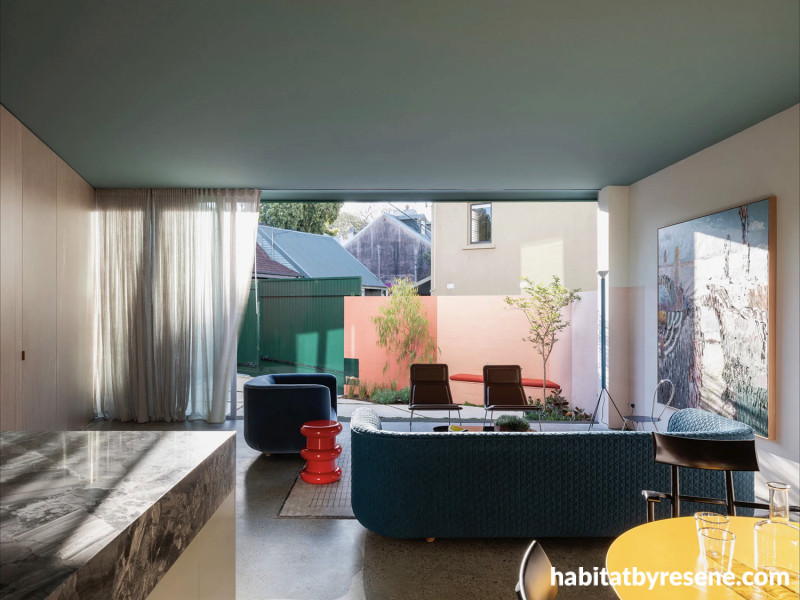
Ceiling in Resene Mako. Project by Home Factor, image by Sampford Cathie.
Preparation is everything
- If your ceiling is new, make sure it is clean, dust free and sealed with a suitable product such as Resene Broadwall Waterborne Wallboard Sealer, Resene Broadwall Surface Prep & Seal or Resene Sureseal, which is recommended for bathrooms and other wet areas.
- Broadwall Surface Prep & Seal is a high build sealer that when applied in one or two coats can disguise surface imperfections and minimise the impact of critical light. Making it ideal for large ceilings (and walls) where windows or lighting draw attention to any imperfections.
- If the ceiling has been painted before, clean it thoroughly using Resene Interior Paintwork Cleaner diluted with water.
- Fill any cracks or gaps, sand smooth and spot prime to ensure an even finish.
- Protect your space by covering floors and furniture with drop sheets, and mask off light fittings to avoid paint splatter.
The painting process
- Start by cutting in around the edges and fittings with a 50mm brush. Work in sections of around 40 to 50cm, blending each area as you go so you don’t leave visible lines.
- Next, use a roller with a PAL No. 1 or the new PAL no.7 roller sleeve, a roller handle and an extension pole. Lightly dampen the roller before loading it with paint so it absorbs evenly.
- Begin near your main light source and work across the shortest length of the room. Apply the paint evenly, working in sections of about one square metre per roller load. Lay off the paint in the same direction each time for a consistent finish, and work close to the edges so the brushed areas don’t create a visible frame.
- It’s important to complete each coat in one go without stopping, maintaining a wet edge to avoid lap marks. Paint the ceiling before the walls and trims.
- Once the first coat is complete, allow two to four hours for it to dry, then apply a second coat. Make sure the room is warm and well-ventilated so the paint cures properly.
For more tips and to watch a short ‘how to’ video on painting your ceiling, click here!
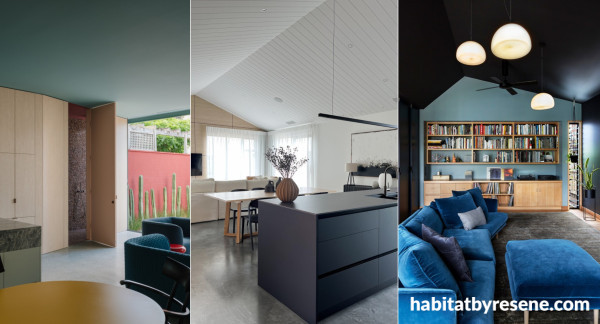
Left: Ceiling in Resene Juniper. Project by Lymesmith, image by Clinton Weaver.
Middle: Ceiling in Resene Double Alabaster. Project by Lucy Furniss Design & Interiors, image by Someday Photography.
Right: Ceiling in Resene Bastille. Project by The Rexroth Mannasmann Collective, image by Christine Francis.
A design opportunity
While white ceilings are a classic choice, they’re not the only option. Try using a quarter or half strength of your wall or trim colour for a more cohesive look. Darker ceilings can create a more intimate feel, making them ideal for media rooms or large spaces. In bedrooms, deep blues can add a calming, cocooning atmosphere reminiscent of the night sky.
For neutrals, the Resene Whites & Neutrals range is a good place to start. You can also pick your favourite shades from the Resene Multi-Finish Range.
For more advice on colour, finishes, and painting your ceiling, visit your local Resene ColorShop, or Ask a Paint Expert online.
Published: 25 Feb 2026