
 look book

latest
habitat tv

Say goodbye to the morning scramble for keys, coats and sunglasses and hello to this… see this and more videos
blog
Reader roundup: Public murals and powder blues
A Morningside mural, an exterior refresh, and striped walls. Let these projects be your inspiration… more
Gabrielle Pelletier – NSW Emerging Architect for 2025
Gabrielle Pelletier - NSW emerging architect for 2025
17 Jul 2026
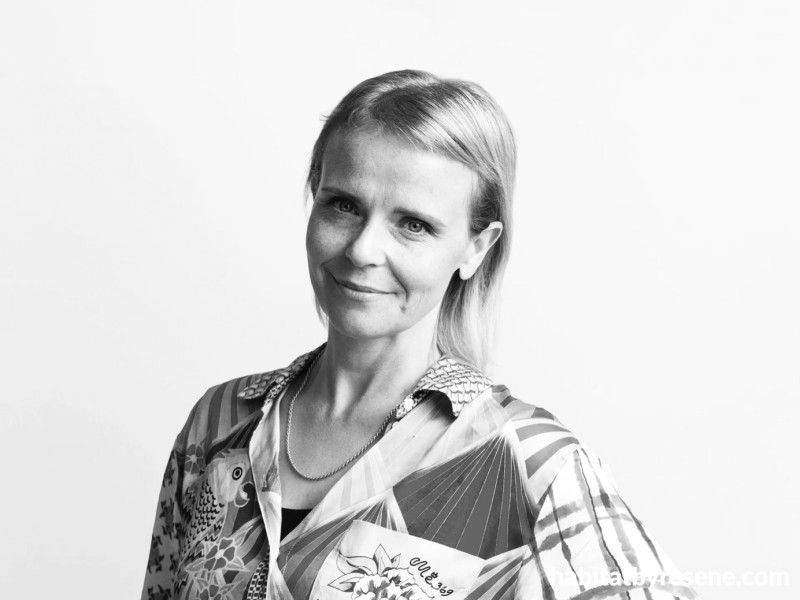
Sam Crawford Architects’ Associate Director and Fellow of the Australian Institute of Architects, Gabrielle has been recognised for advancing architecture through design, education and community engagement.
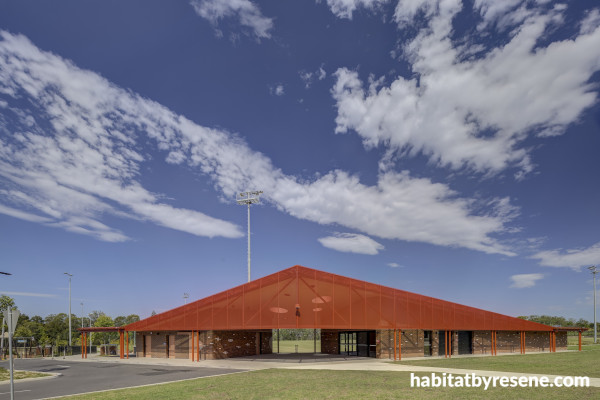
Designed by Sam Crawford Architects in collaboration with Lymesmith and ASPECT Studios, the Willowdale Sports Precinct, completed in 2025, comprises a clubroom, kiosk, changing rooms and public amenities.
Firstly, congratulations on being named NSW Emerging Architect for 2025. What does receiving this accolade mean to you both professionally and personally?
Thank you - it’s still a bit surreal, to be honest. Being named NSW Emerging Architect is important to me in two ways. Firstly, it recognises the work I’ve done over the years in advocacy and sustainability, alongside architecture. Secondly, it demonstrates to emerging architects the impact you can have, even if you don’t have your ‘name on the door’, so to speak.
Personally, the significance is really in the timing. The last few years have been quite intense – balancing a leadership role, becoming a mother and continuing to grow professionally – so the award makes me feel seen; that the hard work has been worthwhile.
Along with the Emerging Architect award, what do you consider your biggest professional achievement to date?
It’s hard to separate a single “achievement” from the broader trajectory, but if I had to point to one [overarching] thing, I think my biggest achievement is building a career that is values-driven. Being able to contribute to award-winning projects – such as the Blacktown Animal Rehoming Centre – while also being deeply involved in sustainability leadership through the Institute, mentoring others and stepping into more strategic roles in practice – that combination feels important to me.
As a sustainability proponent, do you think private industry should be more accountable to contributing to the research and development of sustainable initiatives and products?
Short answer – yes. That said, I tend to frame this less as “accountability” and more as an opportunity for leadership. Some of the most meaningful shifts I’m seeing are coming from industry-led research and development, where companies are investing in lower-impact products and being transparent about performance.
In that context, it’s encouraging to see parts of private industry – like Resene – placing sustainability at the centre of their ethos. Industry plays a huge role in shaping what’s possible through materials, systems and innovation. What we need more of is alignment – architects, industry, clients and government all working toward shared benchmarks. When that happens, sustainable choices become the default, not the exception.
How important is closer collaboration between government/private/professional agencies to our shared future? Do you see this as the way forward?
It’s completely essential and I’d go as far as saying it’s the only way forward. The challenges we’re facing – housing, climate, infrastructure, social equity – are too complex for any one discipline or sector to solve in isolation. The most successful projects I’ve worked on are those where collaboration starts early and is genuinely embedded, not just something that happens during coordination on site. Architects have a critical role in this. We’re one of the few professions that operates across the entire lifecycle of a project – from early feasibility and business case, through to delivery and occupation. That puts us in a position to establish key ambitions early, and to advocate for them as new stakeholders join the process.
One of the major factors facing our cities is urban sprawl and densification. Is there a solution where the built and natural environments can coexist in an urban context?
Absolutely – and there’s already a lot of good work happening in this space. My ‘ideal city’ would see a broad shift toward medium-density development – townhouses, terraces and 2-6 storey apartment buildings – as a baseline for both new and infill development. This would allow for the reclamation of land for ecological diversity, with larger environmental zones supported by connected green corridors running through both new and established suburbs.
To learn more about Gabrielle’s work, visit samcrawfordarchitects.com.au
Published: 17 Jul 2026