look book
latest
habitat tv

Say goodbye to the morning scramble for keys, coats and sunglasses and hello to this… see this and more videos
blog
Reader roundup: Public murals and powder blues
A Morningside mural, an exterior refresh, and striped walls. Let these projects be your inspiration… more
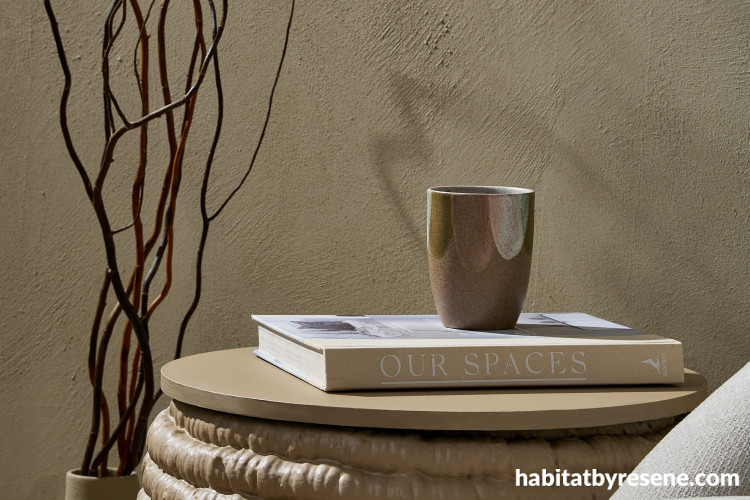

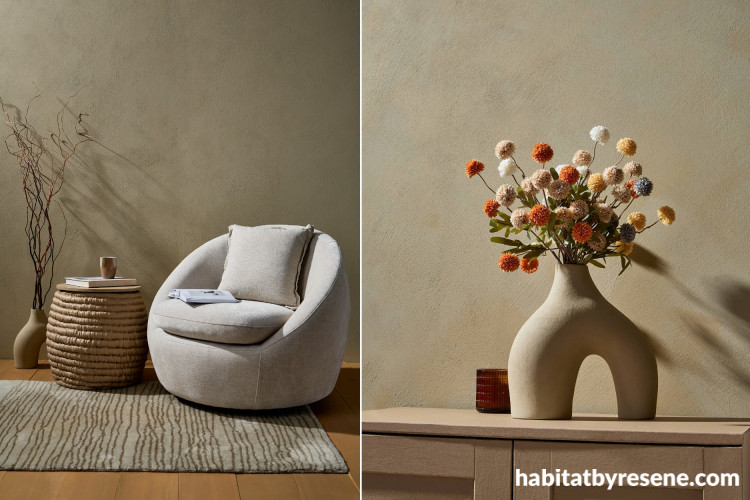
Walls and vase in Resene MyArtisan Foundation Coat in Resene Sisal, side table and console in Sandal, floor in Resene Colorwood Bask. Chair from Danske Møbler. Project by Pamela McIntosh, image by Bryce Carleton.

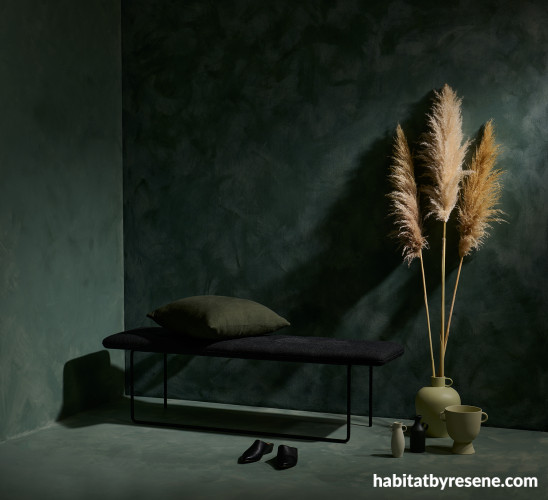
Right wall in Resene Mangrove with Resene FX Paint Effects Medium coloured with Ravine, left wall in Ravine with FX Paint Effects Medium coloured with Mangrove, floor in Pumice with FX Paint Effects Medium coloured with Ravine. Project by Laura Lynn Johnston, image by Bryce Carleton.

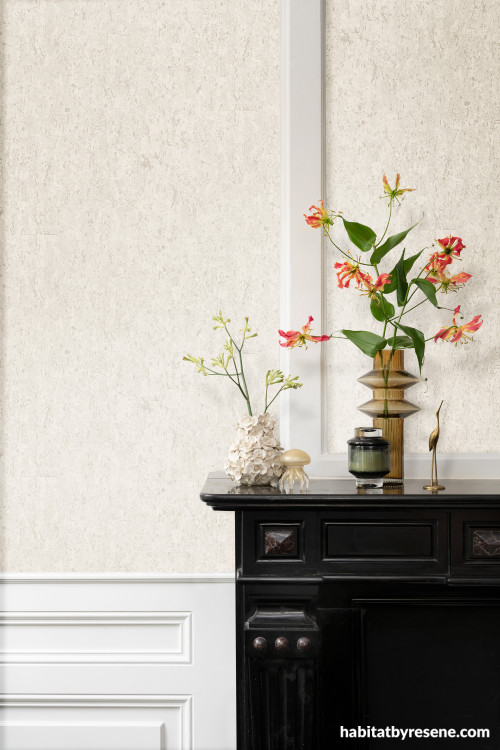
Keep things neutral while still adding that textured look you’re after with Resene Curiosity Wallpaper Collection 538311.

Let’s talk texture: A hot new trend in home design
Widely considered to be the first of our senses to develop in utero, touch allows us to have immediate and real interaction with the world. Not surprising then that from an early age we tend to gravitate towards tactile surfaces.
In 1946, Resene’s very first product was called Stipplecote and the company was named for it, only changing to Resene in the mid 1960’s – Resene was named after the core ingredient in waterborne paints: ‘resin’. Stipplecote is a cement-based coating that was applied by brush using a crows foot or cross-hatch technique. This was a time when paint rollers were yet to be invented and as these early coatings dried more quickly than modern paints, they could only be successfully applied using these techniques.
While it wasn’t developed as a textured finish, Stipplecote was Resene's first coating and first so-called textured finish. Others followed, including Resetex, which is still available, and Resene’s first foray into DIY textures: Resene Textucote, which was introduced in the 1970’s.
Resene’s latest offering is MyArtisan Foundation Coat.
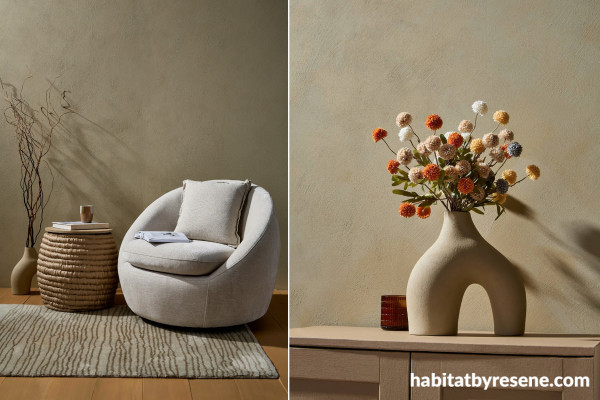
Walls and vase in Resene MyArtisan Foundation Coat in Resene Sisal, side table and console in Sandal, floor in Resene Colorwood Bask. Chair from Danske Møbler. Project by Pamela McIntosh, image by Bryce Carleton.
In the world of interiors, texture reigns supreme, regardless of whether you’re looking to create a minimalist or maximalist style. MyArtisan Foundation Coat works across all design variations thanks to its innovative waterborne/acrylic polymer formulation, which is the secret behind its textural finish.
A two-coat application, MyArtisan Foundation Coat can be applied to impart a plaster-like finish or further worked to create a cross-hatch appearance. It has also been designed to work as a base coat for other MyArtisan finishes.
Able to be tinted to nearly every one of Resene’s 6000 swatches, MyArtisan Foundation Coat combines colour and creativity to impart a beautifully textured finish that feels handcrafted and full of character – ideal for creating a distinctive, bespoke look.
Resene Pro Tip: To achieve a crow’s foot or cross-hatch brushed finish using MyArtisan Foundation Coat, apply an anchor coat by roller at approximately 6-8m2 per litre. Once dry, roll on a second coat and while still wet, use a large, dry brush to create the crow’s foot effect. For larger areas this look is best achieved by two painters working alongside each other, with the first painter rolling the Resene MyArtisan Foundation Coat onto the anchor coat, while the second painter texturises the still wet coating as the application progresses.
Click here for videos on How to apply MyArtisan Foundation Coat.
Other ways to add texture:
If the texture you’re looking to create is more visual in nature, Resene has a range of paint and wallpaper products that are fit for purpose.
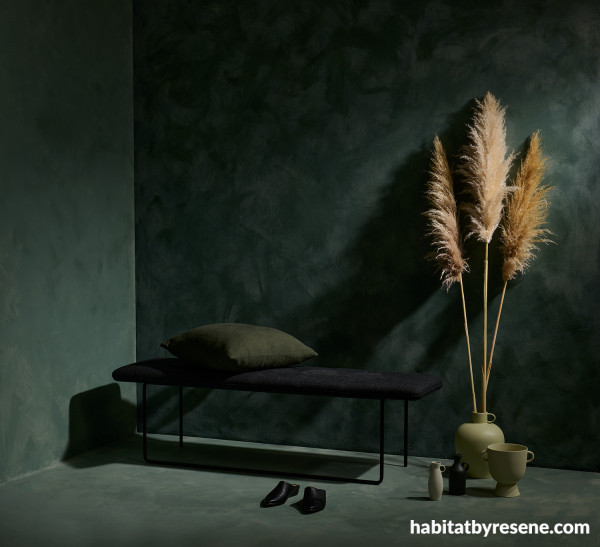
Right wall in Resene Mangrove with Resene FX Paint Effects Medium coloured with Ravine, left wall in Ravine with FX Paint Effects Medium coloured with Mangrove, floor in Pumice with FX Paint Effects Medium coloured with Ravine. Project by Laura Lynn Johnston, image by Bryce Carleton.
The Resene FX range, which includes Metallic, Paint Effects Medium, Faux Rust and Crackle, offers you the freedom to transform the plainest of surfaces into an instant talking point. Resene’s paint effects are designed for durability, giving you confidence that the look you painstakingly create today will continue to look good for years to come. Some techniques also have the practical benefit of disguising surface imperfections, in fact, in some instances, these imperfections can enhance the overall impact.
Resene Pro Tip: If you’re using Resene FX Paint Effects Medium for the first time, create a test board to practice your technique and check the colour, as the mixture can look different when fully dried. For a natural, soft effect, apply multiple thin, layered coats rather than one thick coat and build from there. If a section looks too dark or heavy, quickly use a clean, dry rag to remove excess paint, or blend it with your basecoat colour. Use multiple colours in the mixture for highlights and lowlights to add depth.
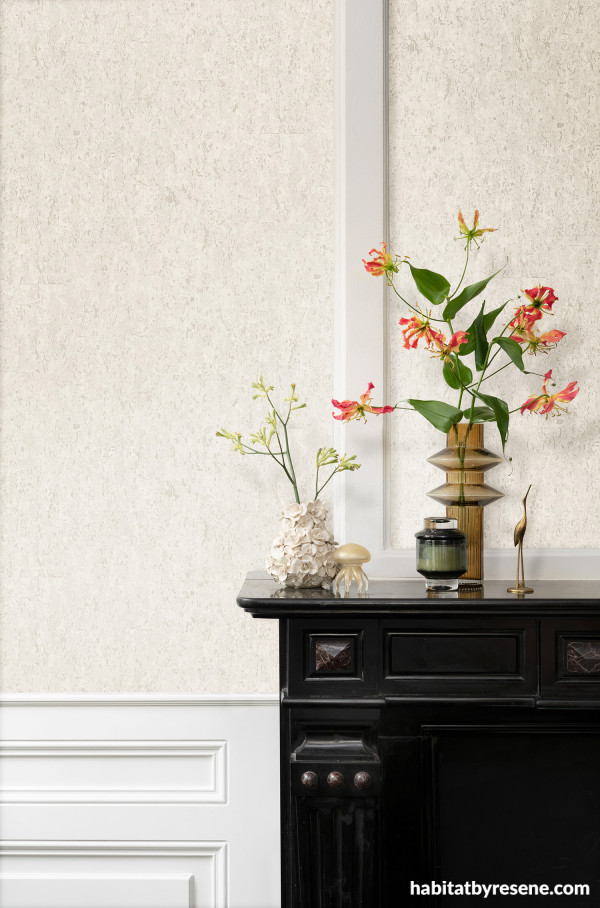
Keep things neutral while still adding that textured look you’re after with Resene Curiosity Wallpaper Collection 538311.
Of late, wallpaper has been experiencing something of a renaissance in the world of interior design, with bold geometric and vibrant floral prints coming to the fore. Resene wallpaper collections, such as McKenzie, Perfect Harmony and Curiosity, add a dash of whimsy and wonder to the beauty of nature, taking classic motifs and applying a modern twist to create spaces that feel uplifting and stylish. Likewise, the 2026 release, Cirque – Act Two, places beloved Kiwiana imagery front and centre.
Resene Pro Tip: Just as you grab a Resene testpot or drawdown to sample paint, so too should you test a sample of wallpaper. You can use the Resene Wallpaper Collection cut length service to buy two to four metres of your chosen wallpaper. Wrap the wallpaper around a canvas or frame, or simply pin up the sample in the room you are planning to use it in and view it during the day and at night to see how different lighting scenarios change how it looks.
For more design ideas, check out Resene’s blog, Turn up the texture, or browse through the habitat plus - Decorating and colour trends booklet.
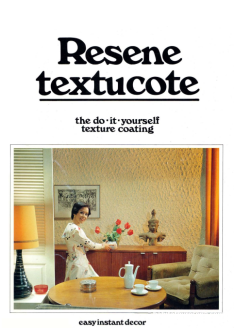
In celebration of 80 years with Resene, click here to check out the 1970's brochure of Resene Textucote.
Published: 16 Apr 2026
Do you have a home full of wonderful Resene paint and colour? Send us some snaps by emailing [email protected].

the look
If you're stuck on what
colour to use or need colour
advice, try out the Resene
Ask a Colour Expert service.
the look
If you're stuck on what
colour to use or need colour
advice, try out the Resene
Ask a Colour Expert service.