look book
latest
habitat tv

Say goodbye to the morning scramble for keys, coats and sunglasses and hello to this… see this and more videos
blog
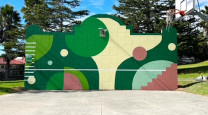
Reader roundup: Public murals and powder blues
A Morningside mural, an exterior refresh, and striped walls. Let these projects be your inspiration… more
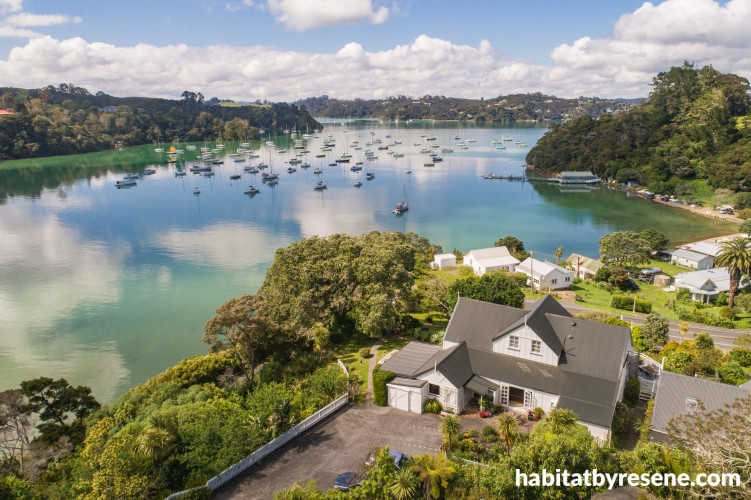
Arcadia Lodge

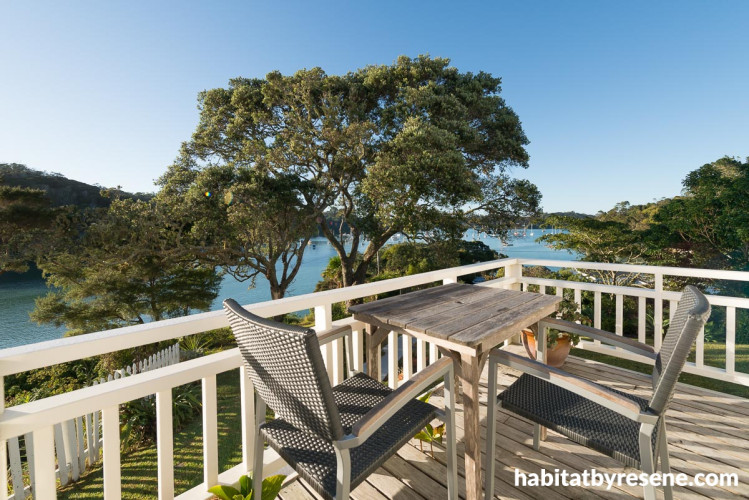
Arcadia Lodge, view of Matauwhi Bay.









Arcadia Lodge: History on their side
Encompassing more than 140 islands, the Bay of Islands region is world-renowned for its undeveloped beaches, big-game fishing and as New Zealand’s ‘winterless north’. An estimated 800,000 visitors descend upon the region during the peak summer period, continuing a love-affair with the region that dates back to pre-European times.
When the first European explorers began arriving in the 18th century, they discovered an already thriving population, particularly around the port area of what is now Russell. What followed was a period of economic growth marked by moral decline as the area entered an era of lawlessness that saw it given the moniker of “Hell Hole of the Pacific”.
From the 1840s onwards, that reputation began to change as missionaries from the Catholic and Anglican faiths set up parishes to minister to the local population.
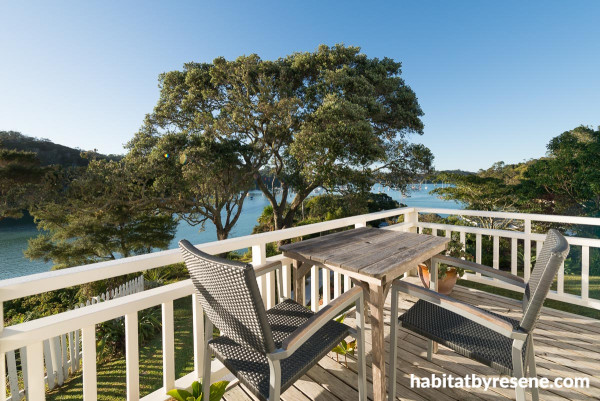
Arcadia Lodge, view of Matauwhi Bay.
One such missionary was the Reverend R G Boler, who served as the area’s Anglican minister from 1902 to 1909. Following his arrival in Russell, the reverend built himself a home at Matauwhi Bay from local heart kauri, as well as shipwrecked and demolition timbers.
The good reverend was known to open his home to those in need, establishing a precedent of hostelry for the property that continues to this day.
Now known as Arcadia Lodge Russell, the 124-year-old property is run as a B&B by current owners Peter Gillan and Greg Hoover, who have owned it for 10 years.
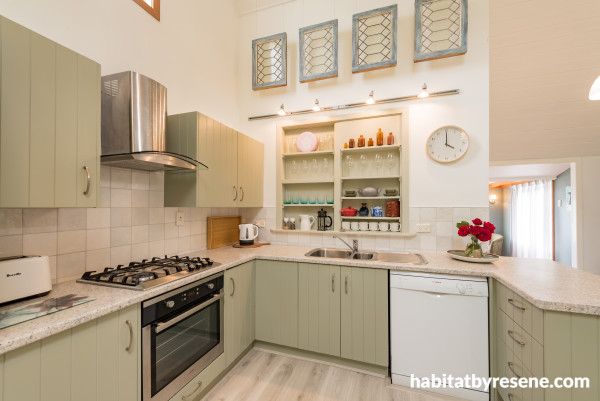
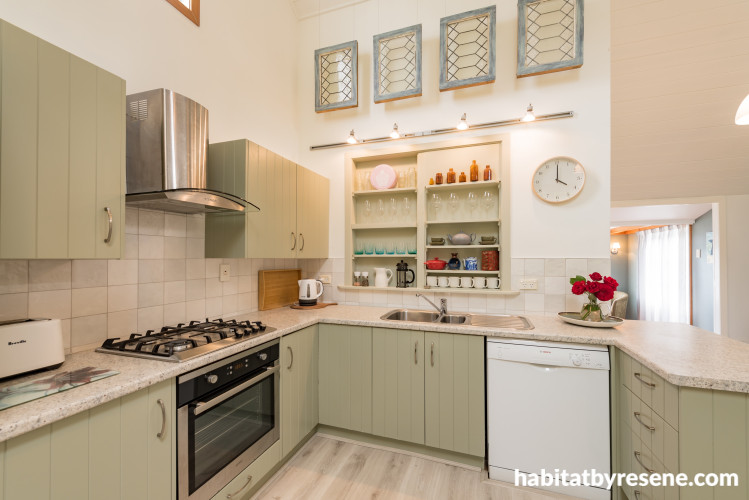
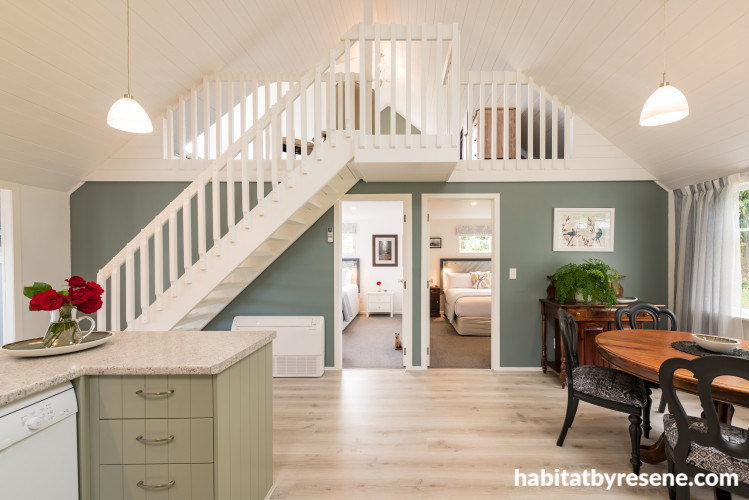
Kitchen cabinetry in Resene Double Lemon Grass.
“When we bought the property, it was in surprisingly good condition, however, each room was a different colour. So, while there were no structural issues that needed to be addressed straight away, we set about unifying the colour scheme,” says Peter.
The couple wanted to create a scheme that felt welcoming, was sympathetic to the history of the property but also updated, and that placed the view of the bay front and centre.
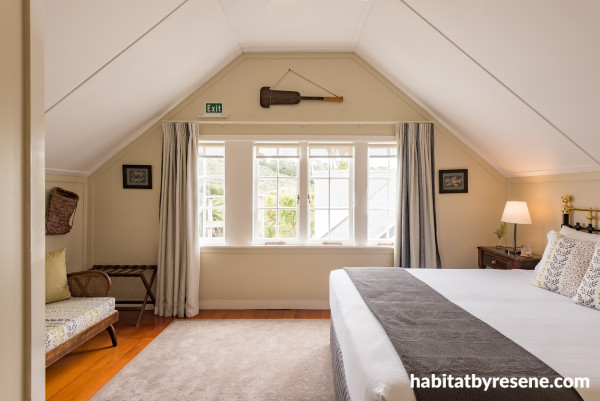
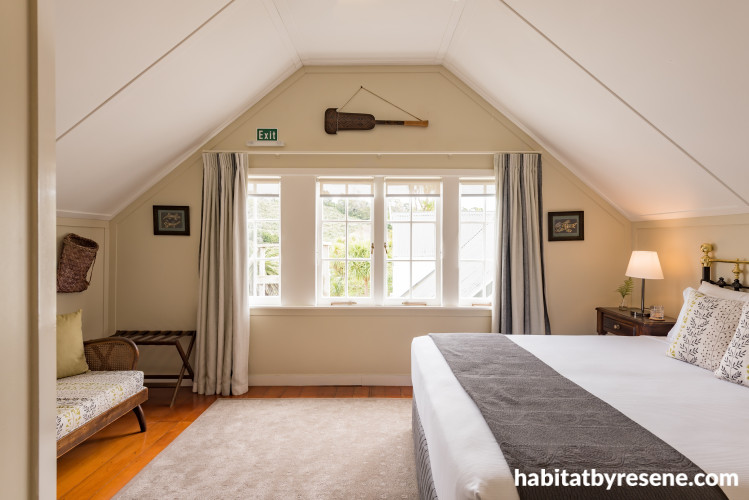
Bedroom walls in Resene Linen, ceiling in Alabaster.
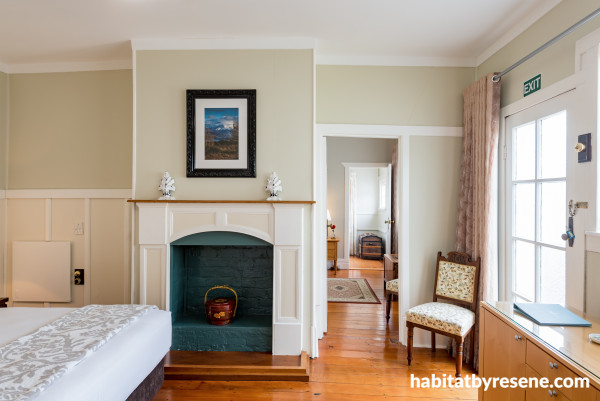
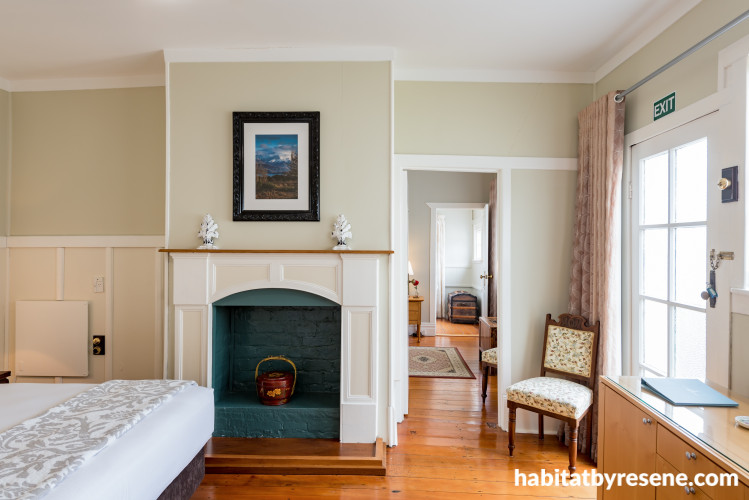
Upper wall in Resene Linen, trims and ceiling in Alabaster.
“Given the hodge-podge that was the existing scheme, our approach was to keep it as simple as possible. We both love Resene Linen, it just seems to be one of those colours that works, regardless of what space you put it into, whether it’s a smaller space or a bigger space, so that formed the base of our palette. In a few spaces we have gone to Half Linen and in one room, Quarter Linen, because it has a really small window,” says Peter.
Greg adds: “Just by changing the intensity, everything still ties together, but you get this beautiful sense of the way the light changes in each room. As you walk through, it feels similar, but all the rooms are just a little bit different.”
Given its elevated position, it’s not surprising that the view over Matauwhi Bay from the lodge is a major drawcard, and one that the couple wanted guests to experience from the moment they check in.
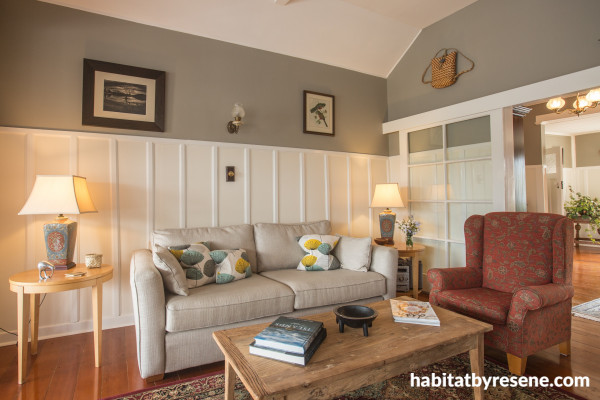
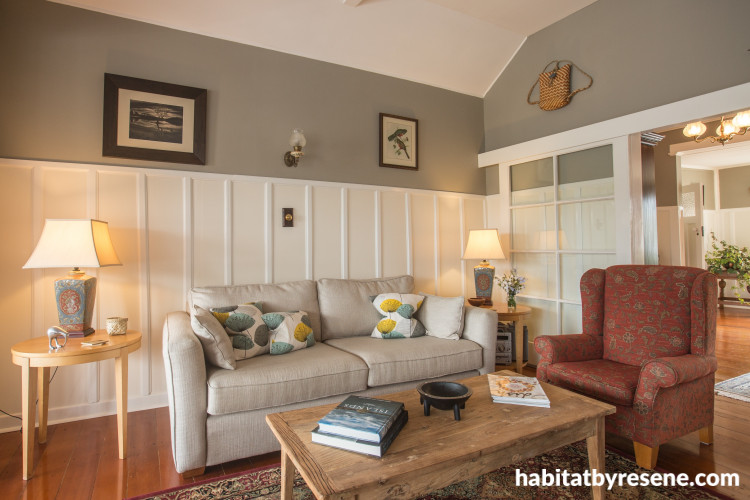
Upper walls in Resene Nomad, lower wall in Half Linen and Alabaster.
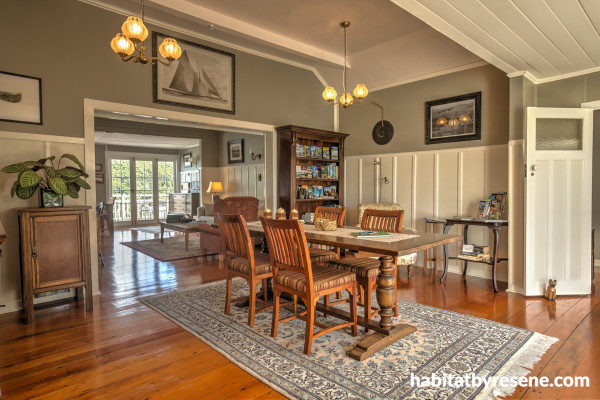
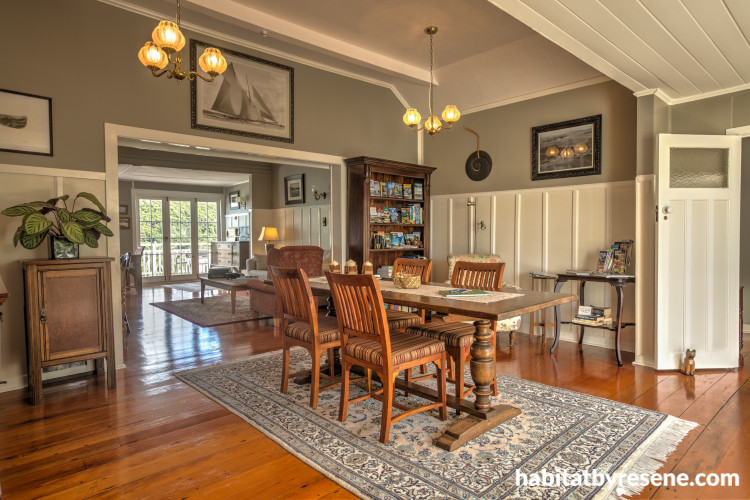
Upper walls in Resene Nomad, lower wall and paneling in Half Linen and Alabaster.
“When guests arrive into our front lobby, their gaze is inevitably drawn through the lounge and dining room and out to the sea view. Being located in the centre of the house, this area is slightly darker, so we wanted to play on that and chose Nomad for the upper walls.
“The darker shade allows the full-width windows at the end to really stand out and provide that ‘wow moment’ for guests. It’s also a really nice complement to Linen and helps reinforce the calm, serene feel we were after,” says Peter.
“It's amazing how many people ask what the colours are,” says Greg. “I would say probably on a bi-weekly basis somebody asks what colour the interior of the house is so they can recreate the look back home. It’s really such a great compliment because we painted it in a way that it feels like home, maybe not their home directly, but it feels very much like we’re sharing our home with them.”
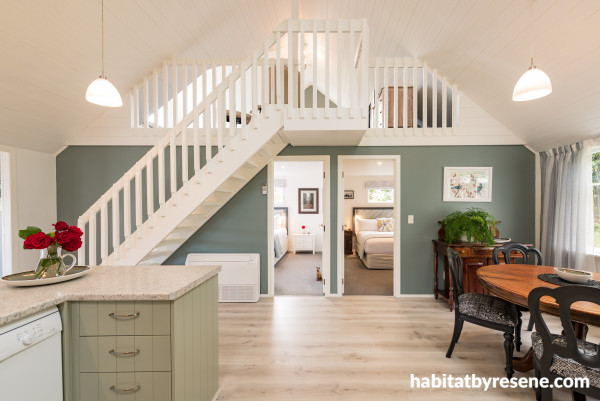
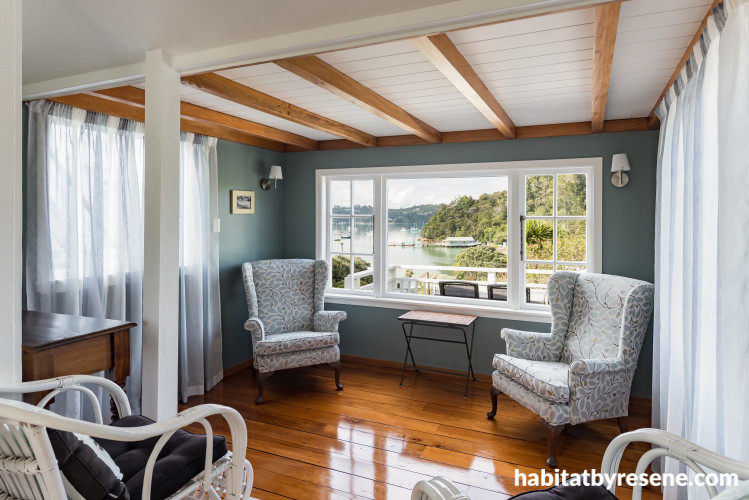
Lower wall in Resene Innocence, surrounding walls in Quarter Linen.
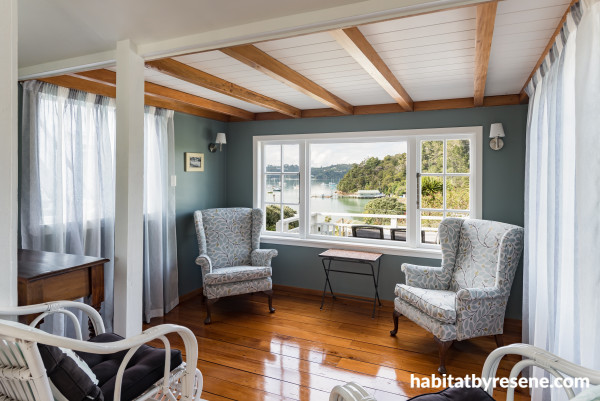
Sitting room in Resene Innocence, ceiling in Double Alabaster.
A further part of the property is a standalone, two-bedroom cottage that served as Peter and Greg’s home when they moved in. When it was time to renovate the cottage a few years back, Peter says they were conscious to give it a personality of its own.
“We wanted the look to reflect more of the feel of being by the seaside. We also wanted a more relaxed feel, so we chose a palette with more of a bluer tone.”
Resene Double Alabaster has been substituted for Linen, while Innocence provides a cool contrast.
“I think the colors inside the cottage work really well with the light because we get a nice sunrise and sunset. The reflections of the colors in the rooms, although they're a little bit blue and cool, when the sun hits them, it makes them so warm,” says Greg.
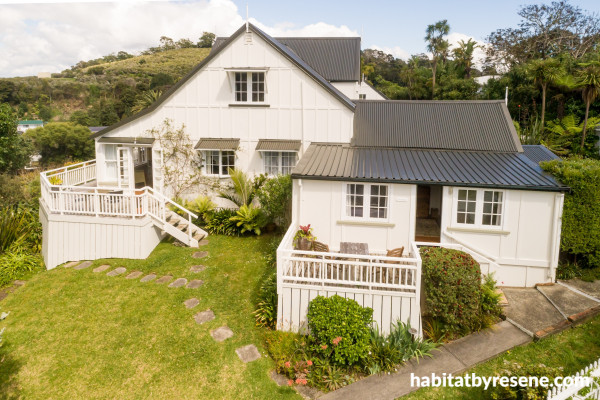
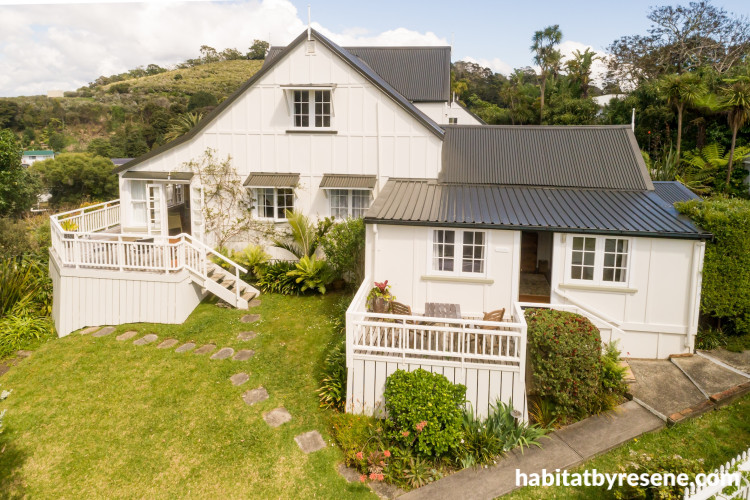
Exterior painted in Resene Lumbersider in Soapstone, roof in Karaka.
The exterior of the lodge, too, has had a recent makeover, including a new roof and colour scheme.
“Re-roofing the lodge has definitely been the biggest project to date but it gave us the opportunity to give the exterior to a much crisper, cleaner feel that works well with the updated interiors,” says Peter.
“We chose Karaka for the roof, which we’ve also used on the window and door trims. This we’ve teamed with Soapstone for the walls, and then an unexpected burst of colour in the form of Red Berry for the front door.
“In all, it feels very accessible and relevant, and should see the lodge through the next 124 years.”
design Peter Gillan and Greg Hoover
Resene Pro Tip:
If you’re planning on painting in the cooler months, Use Resene Wintergrade Additive which allows waterborne paints to properly cure in cold temperatures down to 3°C. Without it, cold weather hardens the paint's acrylic binder particles. This stops them from fusing together, which causes the paint film to crack, lose durability or dry into a weak powder.
If you’re painting in summer, use Resene Hot Weather Additive to prevent waterborne paint from drying too quickly in high heat. It slows evaporation, extends wet edge time, improves paint flow and stops the finish from becoming streaky, thick, or patchy.
Published: 19 Aug 2026
Do you have a home full of wonderful Resene paint and colour? Send us some snaps by emailing [email protected].

Resene Double Lemon Grass

Resene Quarter Linen
Resene Double Alabaster
the look
If you're stuck on what
colour to use or need colour
advice, try out the Resene
Ask a Colour Expert service.
Resene Double Lemon Grass
Resene Quarter Linen
Resene Double Alabaster
the look
If you're stuck on what
colour to use or need colour
advice, try out the Resene
Ask a Colour Expert service.